

“We have been thinking about uncertainty both as a set of material conditions and forms of life or form of life that is produced in and through the experiences of not knowing; of the unpredictable. Of not having the ability to make sense of the world from the position of having knowledge of the future and living in the present that is always changing in relation to and changing our ideas about, how we relate to questions of the future … we’ve opened up the question also in relation to: what would it mean or what can it mean, what will it mean, what does it mean to begin by saying, “I don’t know or we don’t know?”
Prishani Naidoo, Living with Uncertainty (2022)
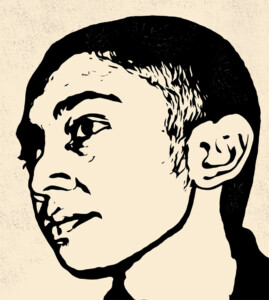
We began the year without knowing, without predictability, within grief and loss. Yet, by re-membering Prishani Naidoo, her voice and her work, we were reminded of how we might engage the unknown. By centering uncertainty in our work, there is the possibility to imagine differently, a yet to come. In her presentation delivered in 2022, Prishani spoke of her work to come that she developed when she became director of SWOP, and shortly after that, in the context of the crisis of the Covid-19 pandemic, in which she asked how we might make sense of a precarious world. It is a framing that has marked much of our work at SWOP in 2025. Prishani spoke of uncertainty as a generative space for critical thought and collective engagement, and in this she reminded us of the power of intellectual work rooted in community, care and resistance.
It is in this sense that the team at SWOP took on the year, re-membering Prishani and continuing the work of forging an intellectual community with care while working through the questions that have animated our engagement with each other. That is, seeing uncertainty as an opportunity to return to certain political questions and to think about crises and alternatives.
Given the context of the year, we are taking this moment to reflect on some of the work that we have undertaken through 2025, and the continuation of SWOP’s intellectual work under the broad thematic Land, Labour, Life.
SWOP entered 2025 with a process of restructuring. Under the guidance of Prof. Lorena Núñez Carrasco, supported by the Faculty and a group of our research associates, SWOP relocated to a new home in the School of Social Sciences. We are proud to announce that Dineo Skosana was appointed as the head of SWOP by collective decision.
We began the year by honouring and re-membering Prishani’s life on 1st March with tributes from colleagues, friends and communities across different parts of the world that highlighted her remarkable work and intellectual contributions. We are grateful for the support from the Naidoo family, the university, colleagues, associates, and friends.
In April 2025, Dineo launched her book No Last Place to Rest: Mining and Dispossession in South Africa, which explores the struggles of coal-affected communities in the Mpumalanga and KwaZulu-Natal provinces of South Africa. The book emerged from ongoing research in the Just Transition from Coal Programme at SWOP, which explores the impacts of the shift from coal on workers and communities. The launch marked an important moment at SWOP, and it was a celebration of Dineo’s important continuation of research on land and dispossession.
In May, we held a conversation in celebration of Niren Tolsi’s Writing Around the Wicket: Race, Class and History in South African Cricket, which was published in late November 2024. Niren held a number of book launches throughout the country and received substantial media attention for this project. In addition to these two important books, you can also look through a full list of our latest publications, including journal articles and popular publications, here.
In late June, we shifted focus to our collaboration and programme with the National Arts Festival in Makhanda. The program consisted of a public lunchbreak conversation around issues of land dispossession and restitution, as part of the ArtTalk 2025 programme for the festival, with invited guest Mrs Lungiswa Madinda-Mago, a claimant and caretaker of Castle Farm, Salem, Eastern Cape. This was followed by a two-day movement workshop in Johannesburg: Magic Maids broomology 101, facilitated by Eisa Jocson (Philippines) and Venuri Perera (Sri Lanka), held at and in collaboration with Moving into Dance, Newtown. As part of the workshop, a second lunch break was held with the workshop participants around questions of domestic work and reproductive labour.
SWOP’s Popular Politics programme for 2025 was structured around a year-long project: Re-membering Movements. The project was initiated to respond to the tenth anniversary of the 2015/2016 student-worker movement, Fees Must Fall, and took as a starting point Prishani’s work on the concept of ‘re-membering’ in the study of social movements and political struggle. As part of this programme, SWOP hosted a series of participatory workshops on Re-membering FMF, facilitated the hosting of a workshop on Re-membering the Anti-Privitisation Forum, and held a three-day colloquium on Re-membering Movements. The broader project also included a collage-making and visual arts and archival component in re-membering FMF that was undertaken by cultural workers and former student activists. Finally, SWOP participated in the School of Social Sciences 2025 seminar series, co-hosting two sessions with the Department of Sociology (Doing Research Otherwise?) and the Department of Political Studies (Student-led curriculum reform since 2015).
In an ongoing programme focused on infrastructure, SWOP continued to co-host, together with the Public Affairs Research Institute (PARI), the Gauteng City Region Observatory (GCRO) and the Johannesburg Crisis: Concerned Academics, a year-long seminar series on Urban Crisis with a focus on the City of Johannesburg. The seminar series is a collaborative space for scholars, researchers, activists and policy-makers to share their ongoing work on the City of Johannesburg, taking on a wide range of topics from the water and electricity crises, community safety, housing, architecture, urban life and more.
SWOP taught two courses in Political Studies this year, Politics of Infrastructure and Land, Labour, Life. The Politics of Infrastructure, a postgraduate-level course in 2024, was coordinated by Prishani, Ahmed Veriava and Lesego Loate, and was instructed collaboratively and across different disciplines. This year, Lesego, together with other colleagues, focused on water infrastructure. Land, Labour, Life, was coordinated by Dineo with contributions from Simon and Niren and drew from SWOP’s sustained intellectual engagement with thinking about land, labour and life together. After two years of teaching it as an elective, the course has now been made compulsory for 2026.
We are excited to announce that in September 2025, SWOP, in collaboration with the Australian National University, Imperial College (London), University of California, Berkeley, and the University of British Columbia, were awarded support by The Rio Tinto Centre for Future Materials for a project on Co-designing Multi-Value Frameworks for Transparent and Ethical Copper Supply Chain. We hope to announce more about this upcoming project in 2026.
We are also very pleased that Prof. Bridget Kenny will be joining the SWOP team in 2026, while continuing as a member of the Sociology Department. Bridget will contribute primarily to our Land, Labour, Life programme. Bridget worked as a researcher at SWOP from 1997 to 2002, under Prof. Eddie Webster, and as a research associate over many years while focusing on precarious employment, political subjectivity, racialised capitalism, gender, race and urban space. She is currently completing a book manuscript titled Lift Stories: the political intimacies of elevators in 20th-century Johannesburg.
We would like to congratulate Barbara Rousseux on completing her MA (Barbara was co-supervised by Prishani) and SWOP’s Operations Manager, Lucinda Solomon, on graduating with a postgraduate diploma in Public Management.
Throughout this year, we have walked and asked; what does loss mean for our ongoing work? The work of mourning, of acknowledging our debt and our inheritance, will be an ongoing process. We will continue to feel Prishani’s absence, while celebrating her presence in our work and our programmes. With this in mind, we would like to end by thanking those in our broader community who have supported us through this year of uncertainty.